

Introduction
A common mistake many small businesses make is building the wrong type of web page for their current goal. Some owners spend money on a large website when they only need one focused sales page. Others run ads to a single landing page when their business actually needs trust-building pages, service information, blog content, and contact details. Both options can work, but they solve different problems.
This guide explains the difference between a landing page and a full website in simple language. It also helps you decide what to build first if you are launching a new business, running ads, collecting leads, or preparing your site for long-term SEO and AdSense-friendly growth.
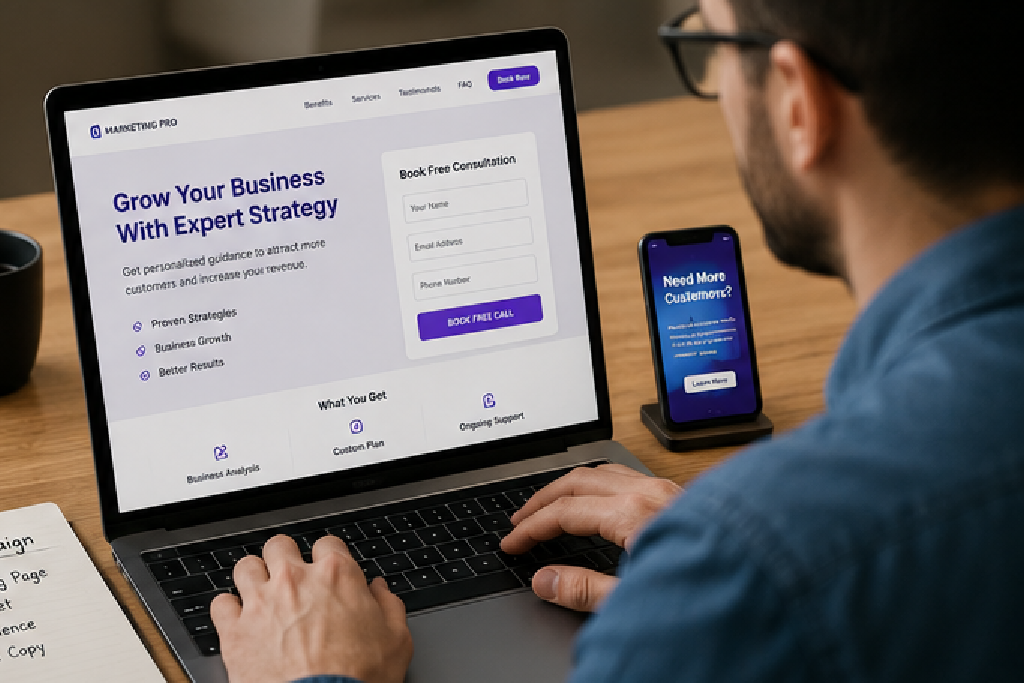
What Is a Landing Page?
A landing page is a focused page built for one clear action. The visitor usually arrives from an ad, social media post, email campaign, or special offer. Instead of showing many menu options, a landing page guides the visitor toward one goal, such as filling a form, booking a call, downloading a guide, or buying a product.
For example, a dental clinic might run Facebook ads for a teeth whitening offer. Instead of sending users to the homepage, the clinic can send them to a landing page that explains the offer, shows benefits, answers common questions, and includes a booking form. The goal is not general browsing; the goal is action.
What Is a Full Website?
A full website is a complete online presence. It usually includes a homepage, about page, service pages, blog posts, contact page, privacy policy, and sometimes portfolio, pricing, FAQs, case studies, or product pages. A full website is better when a business needs trust, search visibility, and long-term content growth.
A website is not only for selling. It helps customers understand who you are, what you offer, why they should trust you, and how they can contact you. For AdSense-focused blogs, a full website structure is also important because one-page websites usually do not provide enough helpful content, navigation, or trust signals.
Landing Page vs Full Website: Main Difference
| Point | Landing Page | Full Website |
|---|---|---|
| Main purpose | One action such as lead, call, signup, or sale | Complete brand presence and information |
| Best traffic source | Ads, email campaigns, social media campaigns | Google Search, direct visits, referrals, blogs |
| Navigation | Usually limited or removed | Full menu and multiple pages |
| SEO value | Limited unless supported by other content | Stronger for long-term organic growth |
| Build time | Faster to create | Takes more planning and content |
| Best for AdSense blog | Not enough alone | Recommended structure |

When Should You Build a Landing Page First?
A landing page is a smart choice when your business has one specific offer and needs results quickly. It is especially useful for paid ads because the message can match the ad exactly. If your ad says “Book a free consultation,” the landing page should explain the consultation and make booking easy.
- You are testing one service or product idea.
- You are running Google Ads, Meta Ads, LinkedIn Ads, or email campaigns.
- You want to collect leads before building a full website.
- You need a campaign page for a limited-time offer.
- You want fewer distractions and one clear call to action.
When Should You Build a Full Website First?
A full website is better when people need more information before they trust you. This is common for service businesses, agencies, schools, clinics, software companies, consultants, and any business that wants to grow through search engines.
- You want to rank on Google for multiple services or topics.
- You need an About page, service pages, contact page, blog, and policy pages.
- You want to apply for AdSense in the future.
- Your customers compare you with competitors before contacting you.
- You want to publish helpful articles and build authority over time.
Which One Is Better for AdSense?
For AdSense approval, a full blog-style website is usually the better direction. A single landing page may look thin because it has limited content, limited navigation, and often focuses only on promotion. AdSense-friendly websites should provide useful content, clear navigation, original writing, and policy pages such as Privacy Policy, Contact, About, Terms, and Disclaimer.
This does not mean landing pages are bad. It simply means landing pages are better for campaigns, while full websites are better for publishing, SEO, brand trust, and monetization. A strong strategy is to build a proper website first and then create landing pages inside that website for specific offers.
Best Practical Strategy for Small Businesses
If your budget is limited, start with a small but complete website. You do not need 30 pages in the beginning. A good starter website can include five core pages and a blog section. After that, you can add landing pages for ads.
- Homepage: Clear explanation of who you help and what you offer.
- About page: A human story, experience, and trust signals.
- Services or products page: Details of your main offer.
- Blog section: Helpful educational content for SEO and AdSense readiness.
- Contact page: Form, email, location if needed, and business details.

Common Mistakes to Avoid
- Sending ad traffic to a confusing homepage with no clear offer.
- Creating a landing page with copied text and no original explanation.
- Applying for AdSense with only a few thin pages.
- Using too many popups, autoplay videos, or distracting elements.
- Forgetting mobile users. Most visitors will judge your page from a phone.
Conclusion
A landing page is best for one focused campaign. A full website is best for trust, SEO, content publishing, and long-term growth. If your goal is AdSense or organic traffic, build a complete website with helpful articles first. If your goal is lead generation from ads, create landing pages as part of that website. The smartest choice is not landing page or website; it is knowing which one matches your current goal.